Ginga explains why Brazilian soccer looks unlike anywhere else in the world. Here’s the cultural story behind the word and the style.
Anyone who’s watched enough soccer has noticed it without necessarily knowing what to call it. Brazilian players move differently. There’s a rhythm to it, a kind of fluid unpredictability that looks less like technique and more like instinct. The word for that is ginga, and understanding where it comes from explains a lot about why Brazilian soccer has never quite been replicated anywhere else.
Where the word actually comes from
Ginga originates in capoeira, the Afro-Brazilian martial art that developed among enslaved Africans in Brazil as both a form of self-defense and cultural resistance. In capoeira, ginga refers to the constant, rhythmic swaying motion that forms the base of nearly every movement, a kind of perpetual readiness disguised as dance.
That same word eventually became attached to soccer, and not by accident. The body mechanics overlap significantly. The weight shifts, the feints, the sense of moving to a rhythm rather than executing a fixed sequence of steps, these are capoeira principles applied to a ball instead of an opponent.
Why this matters more than it sounds
Most countries developed their soccer identity through structure: tactical systems, positional discipline, repeatable patterns. Brazil developed its identity through something much harder to formalize. Sociologist Rory Miller described the Brazilian playing style as the sporting expression of samba and capoeira, suggesting that what happens on a Brazilian pitch isn’t separate from Brazilian culture. It’s an extension of it.
This is part of why ginga resists being coached in any conventional sense. You can teach a player to dribble. You can’t teach someone to move with the specific rhythmic unpredictability that comes from growing up inside a culture where that movement quality is everywhere, in music, in dance, in the way people walk down the street.
Where it actually gets learned
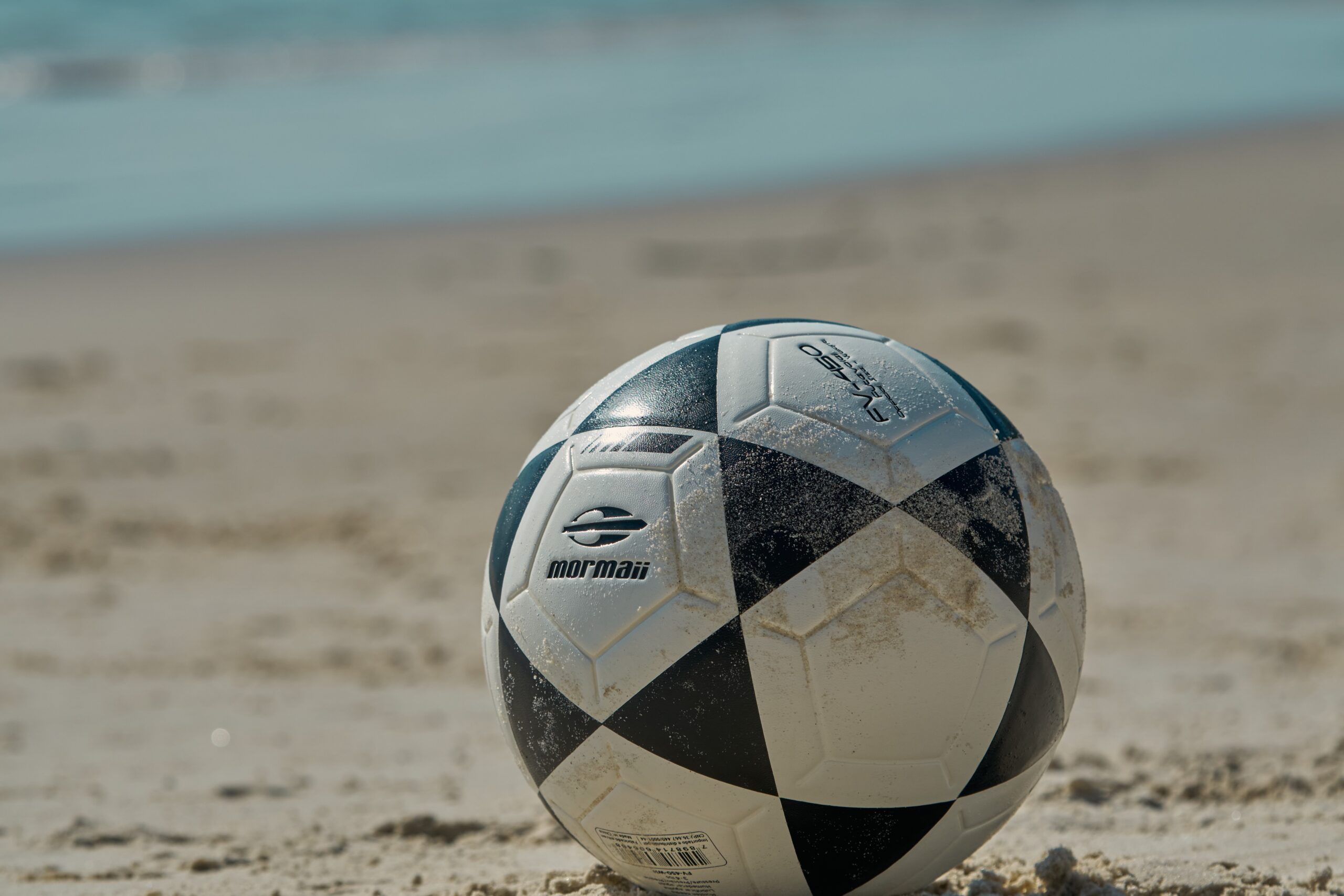
The conditions that produce ginga in Brazilian players rarely involve formal training in the early years. Kids learn the game in alleys, on beaches, in tight informal spaces with no referees and no drills. Futsal, played in small confined courts with a heavier ball, is widely credited with developing the close control and improvisational instincts that later translate to grass. There’s no rigid formation to learn in a pickup game on a beach. There’s only the ball, the space and whatever creative solution gets you past the person in front of you.
That environment produces something specific: players who treat the game as an act of expression rather than a series of correct decisions. The dribble isn’t just a way to get past a defender. It’s often the point in itself.
A cultural export, not just a tactic
What makes ginga interesting from a broader perspective is how thoroughly it resisted replication. Other countries have studied Brazilian soccer extensively, hired Brazilian coaches, imported Brazilian players, and still haven’t produced the same quality of movement at scale. That’s because ginga was never a system to copy. It’s a byproduct of a specific cultural environment that doesn’t transfer through coaching manuals.
This is also why Brazilian soccer has historically been described in aesthetic terms as much as competitive ones. The phrase “the beautiful game” became associated with Brazil specifically because the way the sport was played carried value independent of the result. Winning mattered, but how you won carried its own weight.
What this says about Brazilian sport more broadly
Ginga isn’t unique to soccer. The same rhythmic, improvisational quality shows up in Brazilian jiu-jitsu, in capoeira itself, in the way Brazilian surfers and beach volleyball players move. It reflects something closer to a national relationship with the body and with creative expression in physical movement, one that doesn’t separate sport from culture the way many other countries do.
Understanding ginga, then, isn’t just understanding why Brazilian soccer looks different. It’s understanding why Brazilian sport in general has a distinctive quality that other countries have spent decades trying, and largely failing, to imitate.
Read more: Why People Love Soccer: The Science Behind the Passion